 Listen to our site


There’s always moisture in the air, even if you can’t see it. Most moisture in your home is created by everyday activities like washing, cooking, bathing – even breathing.
Every home gets condensation at some time – usually when lots of moisture and steam are being produced such as at bath times, when cooking meals or washing clothes.
Condensation occurs when warm, moist air (such as steam from a kettle), comes into contact with cool air or a cool surface (such as window panes and around external door and window frames). Water droplets form when the cool air or surface reduces the temperature of the warm, moist air, turning it from gas to liquid.
It can also appear where air circulation is restricted (such as inside cupboards or behind furniture placed against an outside wall).
The common areas for condensation are the kitchen, the bathroom and the bedroom.
If you are worried about condensation, damp or mould in your home, please get in touch with us right away on 0141 560 6000.
How activities affect moisture in our homes
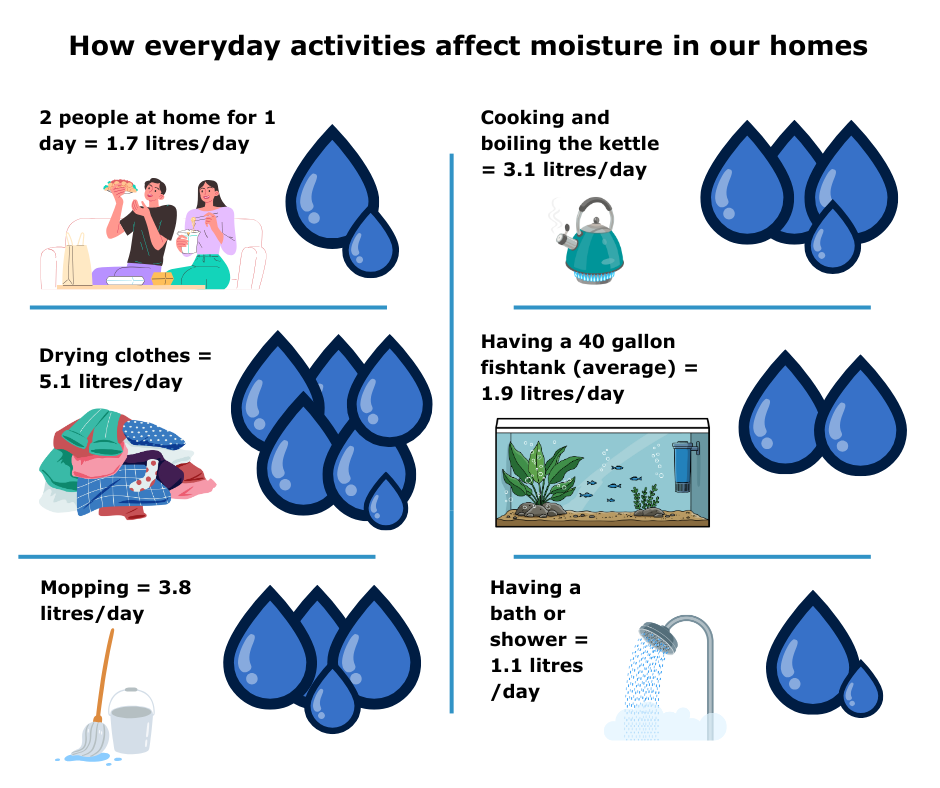
Examples from daily activities:
- Two people at home for one day: 1.7 litres/day
- Drying clothes: 5.1 litres/day
- Mopping: 3.8 litres/day
- Cooking and boiling the kettle: 3.1 litres/day
- Having a 40 gallon fishtank: 1.9 litres/day
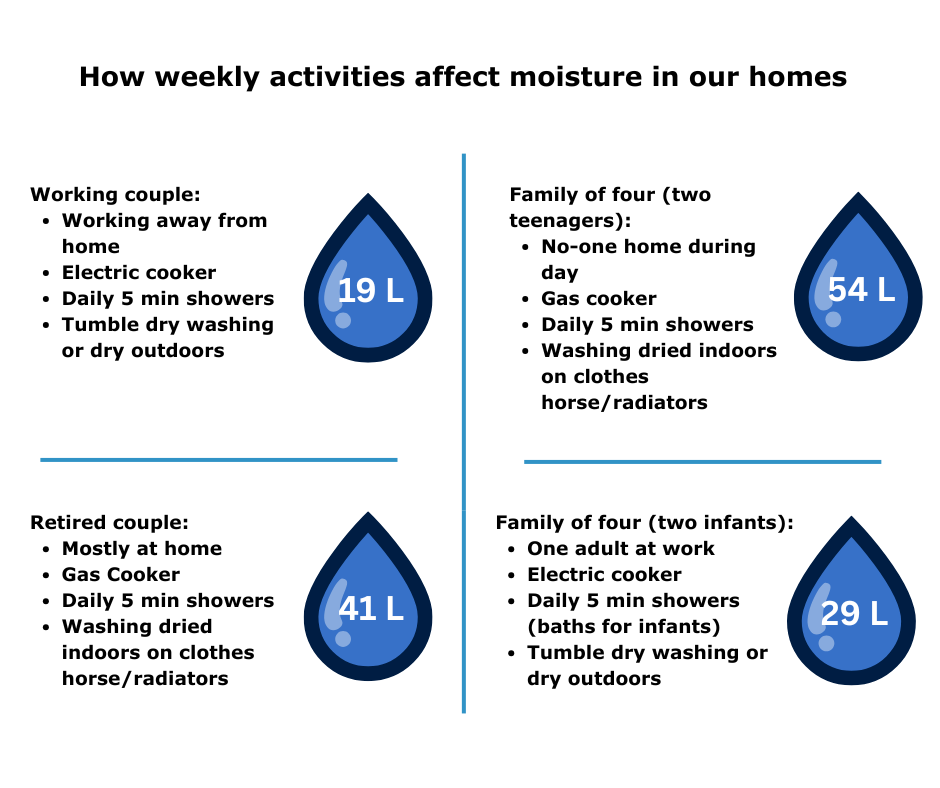
Examples from weekly activities:
- Working couple: 19 litres
- Retired couple: 41 litres
- Family of four (two teenagers): 54 litres
- Family of four (two infants): 29 litres
The risk of condensation depends on how moist your home is and how you ventilate and heat your home. We know it can be difficult with the costs of heating your home, especially in the winter. Small changes can make a big difference in reducing condensation and preventing mould from forming.
Here are tips to help you reduce the amount of moisture produced in your home:
Cooking:
- Use lids on saucepans and don’t leave kettles boiling.
- Always open windows or use extractor fans (if you have one).
- Keep the kitchen door closed when cooking.
Bathing:
- Run cold water before hot when filling a bath—this reduces steam by 90%.
- Keep bathroom doors closed and windows open if you have them. If you don't have a window in your bathroom, make sure you use an extractor fan and leave it running with the door closed for half an hour after you finish bathing.
- Wipe down condensation from windows, sills, tiles, mirrors, or shower screens where required. Make sure the shower curtain is within the bath to avoid water dripping onto the floor. Leave the curtain spread out to dry after use.
Drying clothes:
- Dry clothes outside when possible.
- If drying indoors, use an airer rather than radiators.
- The bathroom is usually best if it has a fan or a slightly open window.
- Avoid drying clothes in bedrooms, as moisture can build up overnight.
Tumble dryers: Ensure vented dryers are properly vented outside. If using a condensing dryer, open a window.
Heaters: Avoid paraffin and portable gas heaters, as they produce excess moisture and pose safety risks.
Improve ventilation
- Use extractor fans in kitchens and bathrooms.
- Open trickle vents in windows and keep them clear.
- Avoid draught-proofing kitchens and bathrooms, as these rooms need ventilation.
- Keep interior doors closed when cooking or showering to prevent moisture from spreading.
- Ventilate bedrooms at night by leaving a window or door slightly open.
- Unblock air vents and air bricks to ensure airflow.
- Leave space behind furniture and avoid overfilling cupboards to improve air circulation.
Manage condensation daily
- Keep your home above 15°C to prevent cold surfaces where condensation forms.
- Wipe down condensation from windows and sills every morning. Dry and wring out the cloth after use.
- Use moisture absorbers (e.g., disposable traps with absorbent crystals or DIY alternatives like a bowl of rock salt or cat litter in a sock).
- Avoid drying wet clothes over radiators.
- Avoid blocking vents in your home.
Following these steps will help keep your home dry, comfortable, and mould-free. If you are worried about condensation, damp or mould, or see signs of mould, in your home, please get in touch with us right away on 0141 560 6000.
Get advice with money and bills
We know it can be difficult to heat your home, especially with the current cost of living crisis. If you are concerned about heating costs or think you may be facing financial difficulties, please get in touch. Our Money Advice Team (GEMAP) can help – if you would like to speak with GEMAP, please call us on 0141 560 6000 to book an appointment.