 Listen to our site


What this means for ng homes
The new legislation means that social landlords like us must act quickly when we are made aware of issues like damp and mould. Each case will be reviewed to assess the severity and potential impact on those living within the home. Some cases may be more serious, triggering certain mandatory actions under the new regulations.
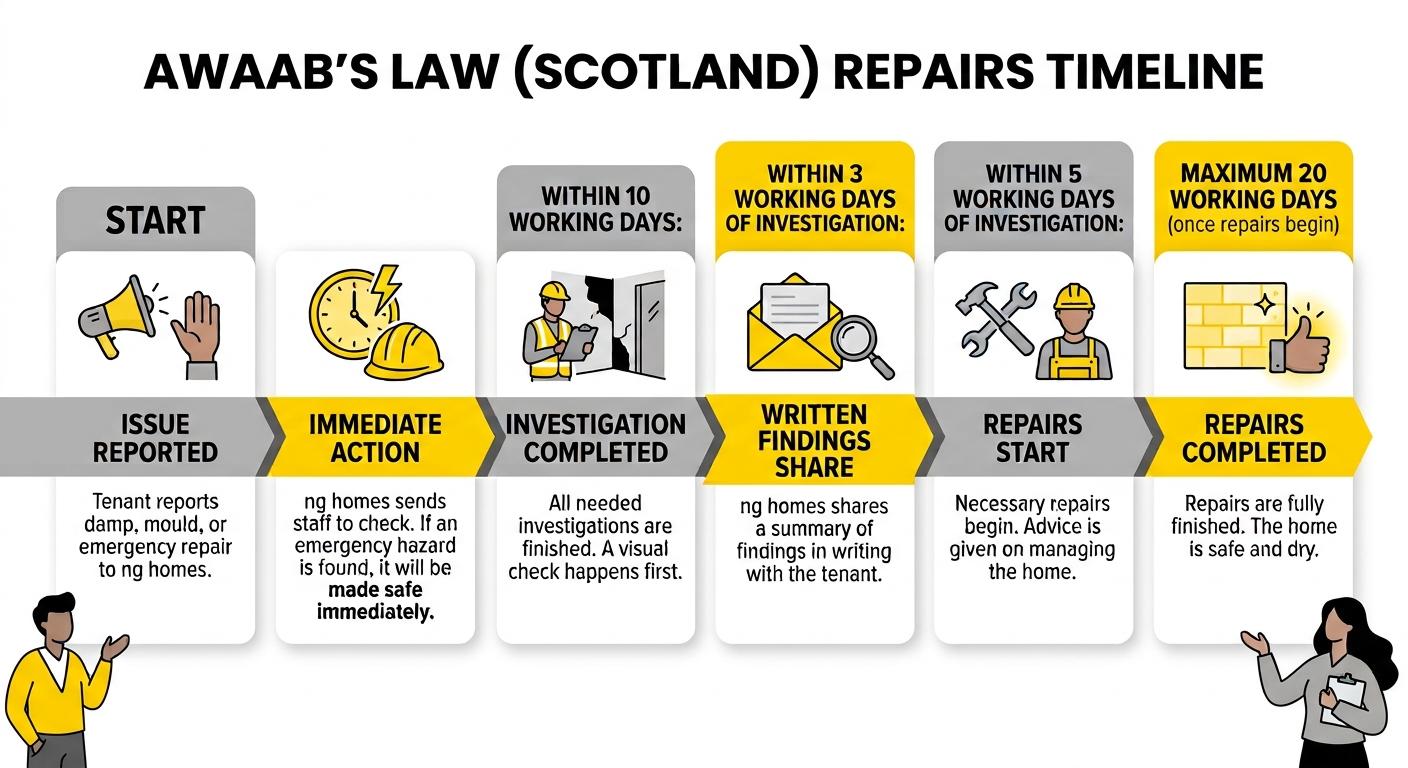
Under the new legislation, we will follow the process below:
- When you report an issue to us, we will send someone to check out the issue. If an emergency hazard is identified, it will be made safe.
- Any investigations which need to be undertaken will be completed within 10 working days.
- We will also start any required repairs within five (5) working days of completing this investigation. We will advise on next steps where further action is required and provide advice to help you manage the wellbeing of your home. If further work is required, it will begin as soon as possible.
- A summary of our findings (from our investigation) will be shared with you in writing within three (3) working days of the investigation’s completion.
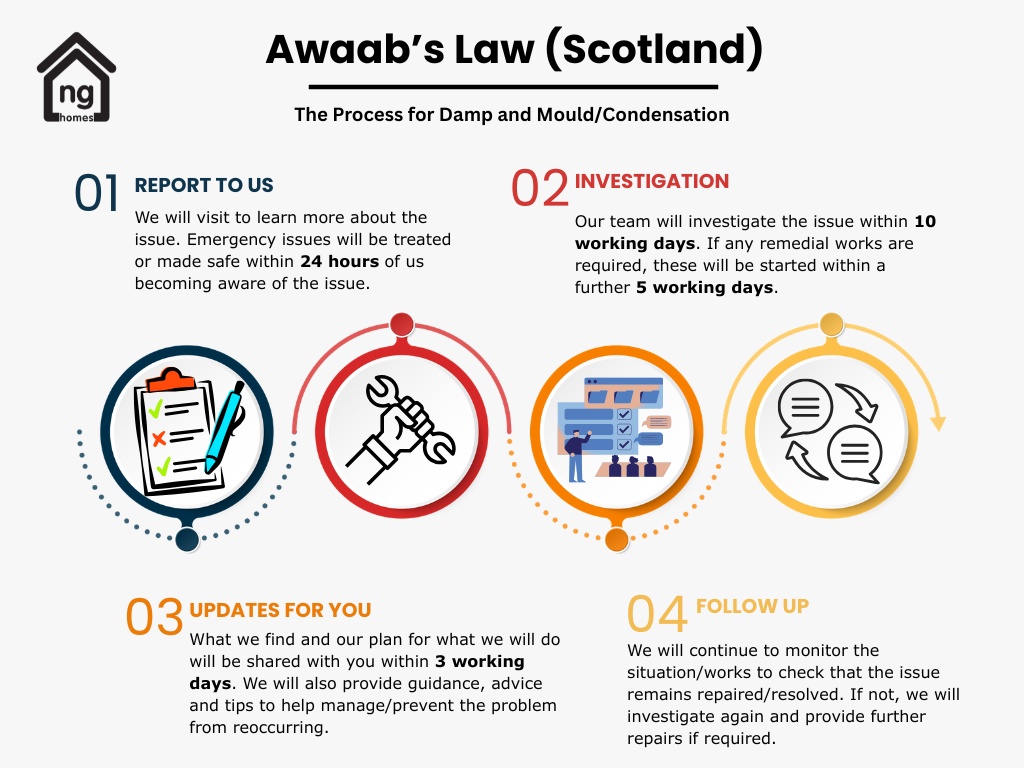
We will be in touch with you throughout the process and provide written summaries of our findings, what's been done and let you know about any additional work which may need to take place.
We will keep you up to date on any next steps. If repairs or further work is required, we will let you know:
- What we will do, including approximately how long this work should take; and
- When we will be carrying the work out.
- Once repairs begin, they will be completed within a maximum of 20 working days.
We will also provide you with advice to help manage the health and wellbeing of your home. We will continue to monitor the repairs for a period after they are completed to ensure that repairs have been successfully put in place.